Cultic Practices in Byzantine Oxyrhynchus:
Graffiti from the Church of the Monastery of St. Kyriakos[1]
Prácticas de culto en el Oxirrinco bizantino:
grafitis de la iglesia del monasterio de San Ciriaco
Leah Mascia
(Freie Universität Berlin)
José Javier Martínez García
(Universidad de Murcia)
Adriana Recasens Escardó
(Independent researcher)
Abstract: The present study aims to provide a thorough analysis of the graffiti identified within and in the surroundings of the church of the monastic complex of Saint Kyriakos at Oxyrhynchus, Egypt. A heterogeneous corpus of epigraphic evidence is examined, counting lists of personal names and commemorative texts. These texts provide valuable insights into writing and cultic practices within this religious institution in the Byzantine phase. Particular attention is devoted to the analysis of writing techniques and the tools selected for the production of these graffiti, as well as to the identification of their potential authors, suggesting the active participation of members of the monastic community as well as devotees visiting the religious complex. In addition, the study examines some examples of multigraphic graffiti, in which textual and figurative elements are combined, among which are Christian religious markers and motifs recurrent in the Egyptian iconographic tradition.
Keywords: Byzantine, Coptic, graffiti, religious mobility, cultic practices.
Resumen: El presente estudio pretende ofrecer un análisis exhaustivo de los grafitos identificados dentro y alrededor de la iglesia del complejo monástico de San Ciriaco en Oxirrinco, Egipto. Se examina un corpus heterogéneo de pruebas epigráficas, que incluye listas de nombres personales y textos conmemorativos. Estos textos proporcionan valiosos datos sobre la escritura y las prácticas de culto en el seno de esta institución religiosa en la fase bizantina. Se presta especial atención al análisis de las técnicas de escritura y los instrumentos seleccionados para la producción de estos textos, así como a la identificación de sus posibles autores, lo que sugiere la participación activa de miembros de la comunidad monástica, así como de devotos que visitaban el complejo religioso. Además, el estudio examina algunos ejemplos de multigráficos, en los que se combinan elementos textuales y figurativos, entre los que se encuentran marcadores religiosos cristianos y motivos recurrentes en la tradición iconográfica egipcia.
Palabras clave: bizantino, copto, graffiti, movilidad religiosa, prácticas de culto.
Laburpena: Azterlan honen helburua da Oxirrinkoko (Egipto) San Zirilo monasterio- konplexuko elizaren barruan eta inguruan identifikatutako grafitoei buruzko azterketa sakona egitea. Lagin epigrafikoen corpus heterogeneo bat aztertu dugu. Corpus horretan, pertsonen izenen zerrendak eta gorazarre-testuak daude. Testuek informazio baliotsua ematen dute erlijio-erakunde horretan bizantziarren garaian zituzten idazketari eta gurtza-praktikei buruz. Arreta handia eskaini diogu idazketa-teknikak eta grafitoak egiteko aukeratutako tresnak aztertzeari, baita haien egile posibleak identifikatzeari ere; horrek iradokitzen du, beraz, monasterioko komunitateko kideen partaidetza aktiboa izan zela, baita bisitan joandako fededunena ere. Gainera, azterlanean grafito multigrafikoen adibide batzuk aztertu ditugu, zeinetan testu-elementuak eta elementu figuratiboak konbinatzen diren. Elementu horien artean ikur kristauak eta Egiptoko tradizio ikonografikoan behin eta berriz agertzen diren motiboak daude..
Gako hitzak: bizantziarra, koptoa, grafitoa, erlijio-mugikortasuna, gurtza-praktikak.
* Correspondencia a / Correspondence to: Leah Mascia, Freie Universität Berlin, Egyptology Seminar — leah.mascia@fu-berlin.de — http://orcid.org/0000-0003-3833-9416.
Cómo citar / How to cite: Mascia, Leah; Martínez García, José Javier; Recasens Escardó, Adriana (2026), «Cultic Practices in Byzantine Oxyrhynchus: Graffiti from the Church of the Monastery of St. Kyriakos», Veleia, 43, 287-309. (https://doi.org/10.1387/veleia.27518).
Recibido: 2 mayo 2025; aceptado: 13 noviembre 2025.
ISSN 0213-2095 - eISSN 2444-3565 / © 2026 UPV/EHU Press
 Esta obra está bajo una licencia
Creative Commons Atribución-NoComercial-SinDerivadas 4.0 Internacional
1. Introduction
The ruins of the ancient city of Oxyrhynchus, known in the Dynastic period as Per-Medjed, are located approximately 190 kilometres south of present-day Cairo. The city was the capital of the nineteenth nomos of Upper Egypt, a region counting wide fertile agricultural lands. Its geographical position, situated at the intersection of a caravan route linking the Bahariya Oasis with the Bahr Yusuf canal, which runs parallel to the Nile River, made the city a key area for commercial exchanges between the Mediterranean, the western oasis regions, and southern Egypt. In the Byzantine period, the city flourished as a prominent religious, administrative, and trading centre. Papyrological and archaeological evidence allow us to follow the progressive urban transformation of this city, with the erection of an intricated network of churches and monastic complexes. Following the Arab conquest, the strategic significance of Oxyrhynchus declined, and the loci of political and religious authority shifted toward other urban centres across Egypt. Throughout Medieval times, the architectural remains of the ancient city were systematically reused as construction materials to develop the urban infrastructure of the newly founded settlement of el-Bahnasa, built upon its ruins. This phenomenon illustrates the continuity of settlement dynamics in the region despite the decline of this ancient city.
2. The Church of the Monastery of St. Kyriakos
The church is situated within the monastic complex of St. Kyriakos (Sector 16). The identification of this religious complex is supported by various evidence, among which is the discovery in this area of an inscribed tombstone commemorating Menas, a prior in a monastery entitled to this saint[2].
The building features a floor plan that combines elements of Christian liturgical architecture with influences derived from Egyptian architectural tradition. Its basilica design was modified by adding a row of columns, which forms an ambulatory, thus replacing the conventional parallel nave configuration and designing a large central space. This ambulatory is outlined by a peripheral colonnade that supports an upper gallery (Fig. 1).
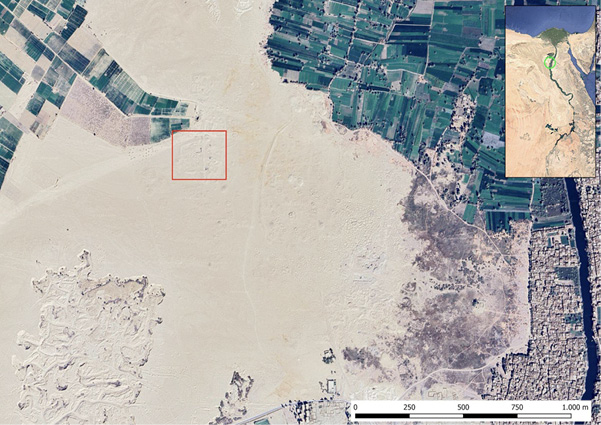
Figure 1. Aerial view of the location of the church outside the necropolis walls
The central nave features a bench running around the perimeter walls, located opposite a series of tombs. The presence of graves and accompanying stelae commemorating members of the Oxyrhynchite elite indicates that the building, alongside hosting possibly a martyrial cult, also fulfilled functions associated with mortuary cults. The sanctuary, oriented towards the east, presents a tripartite plan. It is elevated above the nave through a staircase with two steps, which gives the sanctuary, coated in limestone slabs, the appearance of a tribune or podium. The northern ambulatory connects to other spaces, which are still under investigation. Inside the sanctuary are located two lateral chambers; one of these spaces, where three burials belonging to unknown individuals were discovered, features what can presumably be identified as an aedicula. These findings further indicate that the entire area functioned as a funerary space. At the western end of the nave stands a space outlined by pillars and chancel screens, which formed the choir. The erection of a basin coated with hydraulic mortar or plaster indicates its function for specific ritual practices (Fig. 2).
In the construction process, mud bricks and fired bricks were strategically combined and placed throughout the structure alongside reused columns. Decorative elements such as cornices, door frames, and friezes, discovered during the investigations, were intended to enhance the main architectural lines. Particularly noteworthy is the pluteus of the western choir, which displays a geometric decoration composed of rhombuses and circles, contributing to the overall eclectic style of the building[3].
According to the analysis of the ceramic materials, the building might be dated between the 5th and 7th centuries CE.
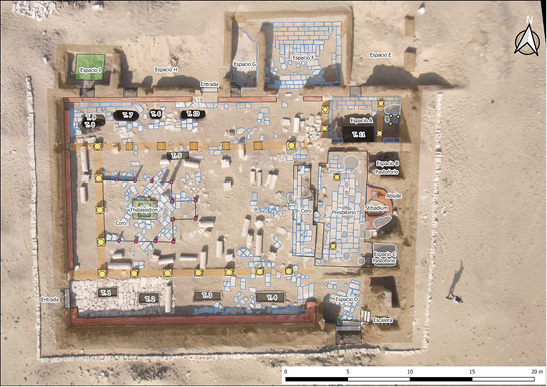
Figure 2. Plan of the church showing the different chambers and annexed structures
3. Graffiti practices in Byzantine Oxyrhynchus: New insights from Sector 16
The investigations conducted between November and December 2024 in Sector 16 have led to the discovery of a heterogeneous corpus of figural and textual graffiti (and dipinti)[4] identified in the surroundings and inside the church of the monastic complex of St. Kyriakos. The evidence collected so far allows us to observe the adoption of various writing tools and techniques, as well as to identify a broad range of actors behind these graffiti practices.
The corpus includes tags[5] and commemorative texts painted in red with thin brushes (inv. no. S16/1/2024 and S16/5/2024), graffiti traced with a piece of charcoal or graphite (inv. no. S16/3/2024), and others carved with sharp tools (inv. no. S16/6/2024; S16/7/2024; S16/10/2024).
Despite their identification on architectural fragments found in secondary contexts, the content of these graffiti suggests that they were inscribed when the monastery was still an active religious centre. In this sense, the blocks, found scattered in the church surroundings (inv. no. S16/3/2024, S16/7/24, S16/6/2024 and S16/10/2024), presumably still formed the walls of the building when these graffiti were carved. Likewise, the analysis of a dipinto identified on a column fragment (inv. no. S16/1/2024) suggests that the author painted the text when the column was still in a vertical position.
Another aspect that suggests that these graffiti practices record cultic activities performed in connection with this religious institution and (perhaps) involved its religious personnel is indeed the variety of techniques and tools witnessed by this epigraphic corpus. While textual and figural graffiti traced with pieces of charcoal and sharp tools record writing practices, which seem not to have required laborious undertaking to find suitable instruments, the two red dipinti imply the use of tools which «occasional» graffiti writers would hardly have had at their disposal, especially pilgrims visiting this religious centre from far away.
When we consider these elements alongside the attestation of honorific titles, authors writing with proficiency, familiarity with religious formulae, and even some who follow contemporary book hand standards, it is plausible to consider the possibility that some of these graffiti record writing practices among members of this and other religious institutions.
In several instances, a single individual was evidently writing on behalf of others (inv. no. S16/5/2024 and inv. no. S16/7/24). While the authors of these «collective» graffiti might have been members of the same religious congregation or fellow pilgrims, we might presume that some of these inscriptions were written by personnel of this religious institution on behalf of devotees visiting this cult place.
Alongside the evidence provided by the investigations conducted in the Basilica of St. Philoxenos, the newly discovered graffiti from the monastic complex of St. Kyriakos indicate the existence of a lively «graffiti industry»[6] in the city of Oxyrhynchus, which is a phenomenon well-attested in various Christian cult spaces across Egypt, Nubia, and beyond[7]. These texts broaden our perspective on the variety of graffiti practices staged within this religious institution, from the hasty scratching of names and figural motifs to the meticulous painting of commemorative texts.
Establishing a chronology for these sources remains problematic; however, a date between the fifth and seventh centuries CE seems plausible for most sources. Only for one graffito (inv. no. S16/3/2024), we could narrow down the date between the sixth and seventh centuries in view of the formulary adopted.
3.1. Dipinto on a column fragment
A Coptic dipinto (inv. no. S16/1/2024) was identified on a fragment of a column (Fig. 3-4) found in a secondary context inside the building (Fig. 5). According to data collected in the course of this archaeological campaign, the column might have originally been located in the southern area of the church. The graffito, measuring 13 x 3,5 cm and painted in red ink, is a tag recording a male individual named Proou. The Coptic text is written by a practised writer in majuscule script using a reed brush and a red —likely ochre-based— ink.
Transcription
1. ⲡⲣⲟⲟⲩ
Translation
Proou
Commentary:
1. ⲡⲣⲟⲟⲩ: This name is well attested in both papyrological and epigraphic evidence. The papyrological documentation records the diffusion of this anthroponym in Egypt among members of Christian congregations and lay people[8]. Attestations in epitaphs and votive inscriptions of the name Proou associated with the honorific title ⲁⲡⲁ are normally interpreted as references to a saint mentioned with Apa Patermoute and the Bawit triad of Apollo, Phib, and Anoup recorded in inscriptions from Abydos[9], Saqqarah[10], and possibly Bawit[11]. However, the absence of the honorific title and the nature of our text suggest identifying an individual named Proou rather than considering the tag as a reference to the aforementioned saint.
Graffiti (and dipinti) on columns have been identified in several religious institutions of Byzantine Egypt, such as Antinoupolis[12] and Athribis[13].
The dipinto records the visit of a devotee named Proou, standing as a tangible memento of his religious devotion. Considering the author’s fair handwriting and the use of a reed brush and ink for painting this text, the inscription might have been painted by a member of this religious congregation on behalf of Proou.
Examining the text orientation, the writer likely painted the graffito when the column was still in a vertical position[14].
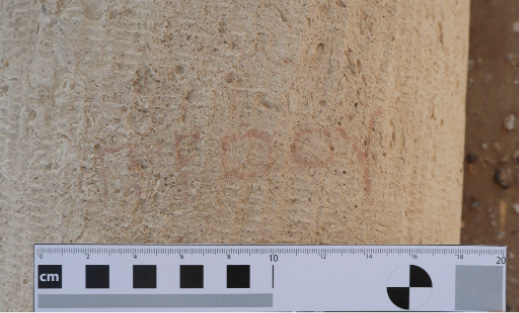
Figure 3. Close-up of the dipinto identified on a column in the church of the monastic complex of St. Kyriakos
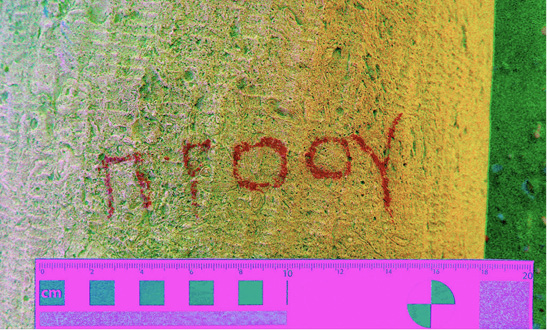
Figure 4. Decorrelation stretch in colorspace CRGB
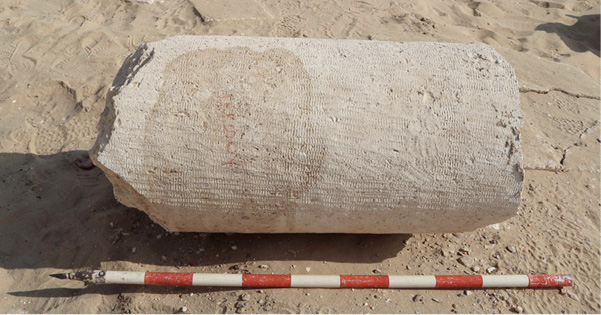
Figure 5. View of the church column fragment featuring the red dipinto
3.2. A red dipinto on the southern entrance staircase
A red dipinto (inv. no. S16/5/2024) was identified on the stairs leading to the southern entrance of the church (Fig. 6-7). The text seems to be only a section of what could have been, originally, an inscription running on the entire surface of the stone slab. The text painted on the plastered coating of the stone is written in a fine Coptic majuscule. The regular letter formation and placement indicate the hand of a trained writer, which finds parallels in contemporary book hands. Establishing a precise chronology remains impossible, and palaeographic parallels can be found in epigraphic and papyrological sources dating between the fifth and the eighth centuries CE. However, it is worth noticing the shape of ⲇ, featuring an oblique upper stroke, and ⲁ, sharing the same feature alongside a broken central bar[15].
As discussed in the examination of the painted tag, this dipinto was evidently the result of an intentional and planned effort that required specific tools and skills.
Transcription
1. ⲇⲓⲁⲕ.[ⲟⲛ]
ⲉⲩⲇⲁ[ⲓⲙⲱⲛ]
3. ⲕⲟⲗ[ⲗⲟⲩⲑⲟⲥ]
Translation
The deacon...Eudaimon...Kollouthos.
Commentary
1. ⲇⲓⲁⲕ.[ⲟⲛ]: The reading is tentative, but the extant part of l. 1 suggests reading the title «deacon». While the title may have been written in Coptic, we cannot exclude the presence of the Greek διάκονος. On the other hand, it can also be evaluated the hypothesis that l. 1 was opened by an anthroponym, considering that other personal names follow on ll. 2 and 3. In this alternative scenario, we could read l. 1, for instance, as Diane. This male name is well-attested in Greek[16] and Coptic[17] sources.
2. ⲉⲩⲇⲁ[ⲓⲙⲱⲛ]: Eudaimon, which is frequently attested in Greek and Coptic sources[18].
3. ⲕⲟⲗ[ⲗⲟⲩⲑⲟⲥ]: This personal name is commonly found in the Greek and Coptic[19] papyrological and epigraphic documentation. While this anthroponym of Egyptian origin is attested from the Ptolemaic phase[20], its popularity increased in the Christian period. A cult devoted to St. Kollouthos, physician and martyr, is attested in the nearby city of Antinoupolis[21]. As a personal name, Kollouthos is often recorded in the Greek Oxyrhynchite papyrological documentation dating from the Byzantine period[22]. The popularity of this name in Oxyrhynchus might also be associated with the veneration of the homonym saint attested in this region.
The dipinto seems to preserve a list of personal names written in Greek or Coptic. Indeed, while written in a fine Coptic majuscule script, it is impossible to ascertain in which language the text was written, considering that only a small section of the original inscription survives. Doubts also remain on the exact content and function of this text. Perhaps the dipinto commemorated the visit of a group of pilgrims to this religious institution.
If the proposed reading of l. 1 is correct, the dipinto is opened with the mention of a deacon. We cannot exclude the possibility that the title refers to the anthroponym on l. 2; however, the dimensions of the slab suggest that the name would have followed on l. 1. Perhaps the individuals mentioned on ll. 2 and 3 were also associated with an office and/or honorific title written on a lost text section. Still, even if we assume the absence of honorific titles for the last two individuals, this does not necessarily exclude their identification as members of a religious congregation, perhaps of lower rank.
Considering that a staircase would have been an odd choice for writing a commemorative inscription[23], we should assume that the dipinto was made before the reuse of the stone slab for the construction of the church entrance (Fig. 8). The dipinto was likely written in this or a nearby structure in a historical phase that precedes the construction (or restoration) of the southern access.
While we cannot exclude that the slab originally belonged to another building, the palaeographic features of the extant section of the text[24], onomastic data[25], and the presumed commemorative significance of this graffito suggest its production in a local Christian religious setting. The investigations carried out over the last years in several Oxyrhynchite Christian buildings have shown how writing red-painted ephemeral inscriptions was an established custom, presumably part of the cultic practices staged in these institutions.
The exact timing and original location of this dipinto remain evidently uncertain; however, its relation with votive acts staged within this or a nearby Christian religious complex is plausible.
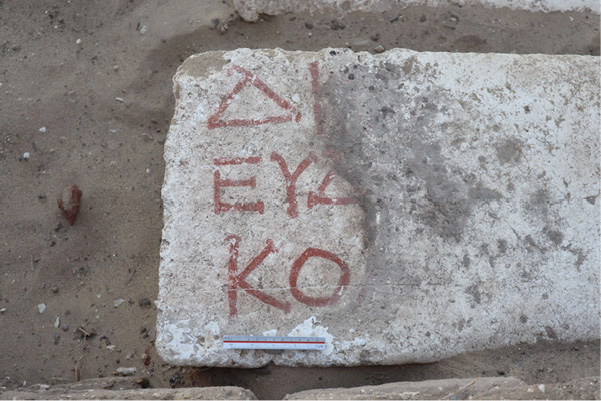
Figure 6. Close-up of the dipinto identified on the church staircase
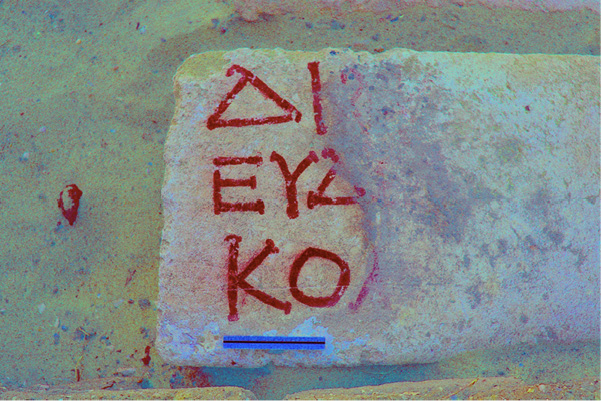
Figure 7. Decorrelation stretch in colorspace LRE
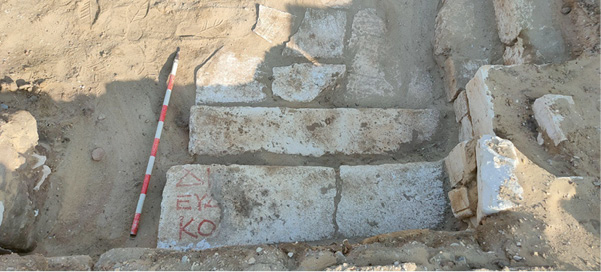
Figura 8. View of the staircase featuring the red dipinto
3.3. Charcoal graffito
A graffito (inv. no. S16/3/2024) carved with a piece of graphite or charcoal (Fig. 9-10) was identified on a stone slab discovered among the debris surrounding the religious complex. The text is in a poor state of conservation, and several sections, some of which were likely written on a now-lost adjoining slab, are missing. For this reason, our analysis and reading of the text must be considered as tentative and possibly subject to future revisions.
The dipinto preserves a text written in Sahidic Coptic commemorating a certain apa Amoun. A drawing, perhaps a vegetal motif, traced between l. 3 and l. 4 on the right margin of the stone slab can probably be identified. Furthermore, part of a carved graffito, which is hardly intelligible, is visible on the top of l. 3.
The graffito seems carved by a practised writer, although the writing surface and the adopted tools might have concurred in making the text appear uneven. Several letters are traced imitating models derived from contemporary manuscript standards[26].
The use of a typical Christian honorific title, familiarity with the use of Christian markers and formulae, and writing skills suggest that the author and/or commissioner of the graffito was a member of a religious congregation. While finding palaeographic parallels for this class of epigraphic sources is notoriously difficult, the use of the formula ⲁⲣⲓ ⲟⲩⲛⲁ suggests that the graffito dates no earlier than the sixth century CE[27].
Transcription
1. [ⲡⲛ]ⲟⲩⲧⲉ ⲙⲁ[ⲕ]
ⲁⲣ(ⲓ)ⲟⲥ ⲁⲣ[ⲓ
ⲟⲩ]ⲛ.ⲁ ⲁⲡⲁ (drawing?)
4. ⲁⲙⲟⲩ.ⲛ.
Translation
God of Macarius, have mercy on apa Amoun.
Commentary
1-2. [ⲡⲛ]ⲟⲩⲧⲉ ⲙⲁ[ⲕ]ⲁⲣ(ⲓ)ⲟⲥ: The expression «God of Macarius» would require a connecting ⲛ or ⲙ, which seems missing in the Oxyrhynchite graffito. The absence of this element might be explained as an error made by the scribe, considering also the missing ⲓ in ⲙⲁⲕⲁⲣⲓⲟⲥ on l. 2. If our reconstruction of the opening section is correct, the graffito would attest to a formula recurrently adopted in Coptic and bilingual funerary stelae from Egypt and Nubia[28]. As noted by A. Łajtar, «Expressions of the type “God of so-and-so” are well-attested in early Christian texts. The figures referred to in these expressions were saints venerated in the very place where the given expression was coined and used[29]».
2-3 ⲁⲣ[ⲓ ⲟⲩ]ⲛ.ⲁ: A prayer well attested across Egypt, in particular, Saqqarah, Akoris, Antinoupolis, and Bawit. The use of this formula is recurrent, especially in funerary inscriptions[30]. This formula is also occasionally attested in commemorative texts and prayers[31]. As previously noted, the use of this formula suggests that the graffito should be dated at least to the sixth century, when this formula is attested for the first time.
3-4. ⲁⲡⲁ ⲁⲙⲟⲩ.ⲛ.: The extant section of the text and the honorific title ⲁⲡⲁ suggest reading the personal name Amoun. ⲁⲙⲟⲩⲛ is a variant of the anthroponym ⲁⲙⲙⲱⲛ, which is a traditional theophoric name frequently attested in the Christian period and recorded in the Oxyrhynchite Greek papyrological documentation until the sixth century CE[32]. While unattested so far in the Coptic documentation published from this site, this anthroponym is frequently mentioned in Coptic papyri[33] and epigraphic sources[34]. As noted by L. Blumell, while there is «no evidence at Oxyrhynchus for a Christian saint bearing this name»[35]34, in the Churches and Monasteries of Egypt, traditionally attributed to Abu Salih and written around the 12th century, a «church of Ammon» is mentioned[36]35. Still, considering the nature of the text, the name refers plausibly to a member of a religious institution rather than a saint.
A certain apa Amoun presumably addresses a prayer to St. Macarius, likely the anti-Chalcedonian martyr Macarius of Tkow[37]. A feast day in honour of this saint is mentioned in a Coptic calendar (fifth or sixth centuries CE), likely found at Oxyrhynchus at the time of B. Grenfell and A. Hunt’s investigations[38]. It remains impossible to establish if Amoun wrote the prayer himself or if someone assisted him in this task. Likewise, it remains unknown if Amoun served in one of the many religious institutions of Oxyrhynchus or was visiting the city from elsewhere. As is well known, a monastery dedicated to St. Macarius is located in what is today known as Deir Abu Maqar in Wadi el-Natrun. The monastery became the patriarchal residence in the mid-sixth century CE; however, the origins of this religious community can be traced back to the fourth century CE[39].
If the presumed use of the invocation «God of Macarius» suggests that the person who wrote (or commissioned) the text was particularly devoted to this saint, we cannot exclude that Amoun belonged to the well-known monastic community of St. Macarius. An alternative scenario would suggest the existence of a prominent cult of St. Macarius in Oxyrhynchus. However, considering the poor evidence known to date, the latter hypothesis remains purely speculative.

Figure 9. Close-up of the stone slab featuring the charcoal graffito

Figure 10. Decorrelation stretch in colorspace LAB
3.4. Scratched graffito
The graffito written in Sahidic Coptic is carved on a stone slab (inv. no. S16/7/24) discovered near this religious complex (Figs. 11-12). The text is a votive inscription written by (or on behalf of) two male individuals. The opening formula consists of an invocation of Jesus Christ and God, which could have originally been completed by a list of other religious figures whose names may have been written on an adjoining stone slab. Indeed, part of the text is missing, as is suggested by the fact that the anthroponym on l. 2 is introduced by a staurogram, which presumably marks the beginning of a new text section.
Only the first individual, Prakos, bears the honorific title ⲁⲡⲁ, while the name on l. 3 seems not associated with any, which does not necessarily imply that only the first-mentioned individual was a member of a religious congregation, but that they perhaps held a different status.
The text is carved by an individual showing discrete writing proficiency, who is familiar with Christian formulae, although there is no use of superlinear strokes.
Transcription
1. ⲓ(ⲏⲥⲟⲩ)ⲥ ⲭ(ⲣⲓⲥⲧⲟ)ⲥ ⲡⲛⲟⲩⲧⲉ ⲛ[…
⳨ ⲁⲡⲁ ⲡⲣⲁⲕⲟ[
3. ⲥ ⲙⲛⲥⲧⲉⲫⲁⲛⲟⲛ
Translation
Jesus Christ, God, apa Prakos and Stefanos.
Commentary:
1. ⲓ(ⲏⲥⲟⲩ)ⲥ ⲭ(ⲣⲓⲥⲧⲟ)ⲥ ⲡⲛⲟⲩⲧⲉ ⲛ[…: Opening formula consisting of an invocation to Jesus Christ (ⲓⲥ ⲭⲥ) and God[40]. The final ⲛ, if the reading is correct, suggests that a section of the text, now lost, was written on an adjoining stone slab. Formulae that associate God with the names of saints and other biblical characters are well-attested in votive inscriptions[41].
2-3. ⲁⲡⲁ ⲡⲣⲁⲕⲟⲥ: The name ⲡⲣⲁⲕⲟⲥ is likely a variant of ⲡⲣⲁⲕⲟⲩⲏⲗ[42], which is attested in Coptic sources.
3. ⲙⲛⲥⲧⲉⲫⲁⲛⲟⲛ: the conjunction ⲙⲛ or ⲙⲉⲛ introduces the name of an individual named Stephanos. ⲥⲧⲉⲫⲁⲛⲟⲛ is likely a variant or misspelling of the common anthroponym ⲥⲧⲉⲫⲁⲛⲟⲥ[43].
The graffito records a commemorative inscription presumably carved on the occasion of a visit to this religious institution. The honorific title preceding the name of the first individual suggests that one or both members of the group belonged to a religious institution. While we cannot exclude that apa Prakos and Stefanos resided in Oxyrhynchus, it is plausible to hypothesise that they were visiting this religious centre from another region. One of the individuals mentioned might have written the text on behalf of his fellow companion. However, it is also plausible that the group of visitors asked someone else, perhaps a member of this religious institution, to carve the graffito.

Figure 11. Close-up of stone slab featuring the scratched graffito

Figure 12. Decorrelation stretch in colorspace LAB
3.5. Multigraphic written artefacts. Part I: The red-cross stone slab
This stone slab (inv. no. S16/6/2024) was found in the external area surrounding the church (Fig. 13-14). The inscribed block can be defined adopting a terminology proper to manuscript studies[44], as a multigraphic written artefact, namely an object that combines visual and textual elements[45]. The stone block features a painted red cross at its centre; traces of writing are visible on the cross surface as well as in the upper and lower margins of the stone.
Several «graffitists» might have left their mark on this stone slab. However, aside from a few letters, none of the textual graffiti carved on the surface can be securely identified, even at a closer autoptic analysis. Bearing in mind these interpretative problems, we can nonetheless advance some hypothetical readings in light of the extant evidence.
To the left of the painted cross, the ⲁ ⲱ motif, carved at the sides of a cross, could possibly be identified. However, while the ⲁ is clearly recognisable, less secure is the identification of ⲱ in the poorly carved semilunar sign at the right side of the cross. Still, the odd shape of the grapheme might be justified by the difficulties faced by the author in carving the letter on the slab surface. Other textual elements might be identified on the upper vertical stroke of the red cross, where the sequence of letters ⲁⲃ, perhaps standing for the honorific title ⲁⲃⲁ, is visible. On the lower section of the slab, the honorific title ⲁⲙⲁ might be tentatively reconstructed.

Figure 13. Close-up of the stone slab featuring a red painted cross as well as textual and figural graffiti

Figure 14. Decorrelation stretch in colorspace LAB
3.6. Multigraphic written artefacts. Part II: The papyrus boat stone slab
Like many of the previously examined specimens, this stone slab (inv. no. S16/10/2024) was found in the extra-mural area surrounding the building (Fig. 15-16). As the stone block featuring a red-painted cross, the inscribed slab can be classified as a multigraphic written artefact[46]. Aside from a few letters, the textual graffiti originally carved on the stone slab are hardly intelligible. A series of oblique strokes further complicates the interpretation of these textual elements. Still, as in the previous multigraphic specimen, it is interesting to note that some letters, like ⲁ, are written imitating standard book hands.
Alongside textual graffiti, several figural elements might be clearly recognised, among which are Christian markers; in particular, a cross in the central right margin of the stone slab. It is interesting to note that to the left of the cross stands a finely carved ⲁ that, despite the apparent absence of ⲱ on the right side, might suggest that the writer intended to carve the typical ⲁ ⲱ motif, which was left incomplete. The most prominent element in this ensemble of graffiti is a boat carved on the upper register of the stone block. The so-called boat graffiti are well attested across Egypt, especially from the Greco-Roman phase. Their unchanged popularity during the Christian period is indicated by the evidence provided by several Egyptian settlements, such as Oxyrhynchus[47] and Elephantine[48] and, outside the borders of the Egyptian lands, Nubia[49].

Figure 15. Close-up of the stone slab featuring a cluster of textual and figural graffiti

Figure 16. Decorrelation stretch in colorspace LAB
4. Conclusion
As discussed in this contribution, the investigations conducted in Sector 16, in the area of the monastic complex of St. Kyriakos, have led to the discovery of a heterogeneous corpus of epigraphic evidence. These sources range from textual and figural elements painted with fine brushes, drawn with pieces of charcoal or graphite, to others incised with sharp tools.
The study of the materiality of this ephemeral evidence, namely the techniques and tools adopted for painting or carving on the architectural features of this building, provides essential data for widening our knowledge of the agency behind these graffiti practices, the reasons that led individuals to leave their mark in this sacred space, and the timing of these activities.
Indeed, the graffiti identified inside the church and, in its surroundings, provide a glimpse into cultic practices staged, most likely, when the monastic complex of St. Kyriakos was an active religious centre. While these inscribed and drawn architectural remains were found predominantly scattered among the ruins of the monastery, several elements suggest indeed that these graffiti were made before the building complex was abandoned.
Among others, the attestation of texts that seem to have originally run on adjoining stone slabs, which were presumably written when the blocks were still part of the building fabric.
The recurrent attestation of honorific titles and the examination of handwritings and tools further indicate that these graffiti are testimonies of a time when this monastic complex was a lively pilgrimage destination.
Many of the authors of these graffiti were skilled writers familiar with Christian formulae; some of the handwritings can even resemble standard book hands. While some of these graffiti might have been written by visitors themselves, among whom were presumably clergy men visiting this religious centre during their travels across the Egyptian lands, we cannot exclude that, on several occasions, someone else was writing on their behalf. The authors to whom the visitors commissioned to write their prayers as an eternal memento of their religious devotion could have been members of the religious personnel of this monastic complex. This interpretation would also explain the recurrent adoption of paint and brushes, tools that pilgrims would have unlikely carried on their travels.
As noted before, the study of the graffiti discovered in the Basilica of St. Philoxenos at Oxyrhynchus, as in many other Egyptian and Nubian settlements, indicates that individuals serving in religious institutions recurrently wrote on behalf of pilgrims on the occasion of their visit. Therefore, writing or drawing graffiti in this context was likely seen as a legitimate practice, part of the various cultic activities performed in the monastic complex.
In other instances, graffiti seem to record more casual activities, such as the crosses, drawings, and brief texts traced on several architectural elements. The boat carved on a stone slab found in the building surroundings, while revealing its author’s discrete artistic abilities, does not provide, as in this latter class of sources, much information about his (or her) identity.
The graffiti recently discovered in the church of St. Kyriakos' investigations discloses to us a fascinating aspect of the cultic activities staged within this religious institution.
Bibliography
Alston, R., 2001, The City in Roman and Byzantine Egypt, London: Routledge.
Beyer Williams, B., 2019, “Graffiti on the El-Kurru Pyramid”, in: G. Emberling, S. Davis (eds.), Graffiti as Devotion Along the Nile and Beyond [Kelsey Museum Publication XVI], Ann Arbor: Kelsey Museum of Archaeology, 39-58.
Blumell, L., 2012, Lettered Christians: Christians, Letters, and Late Antique Oxyrhynchus [New Testament Tools, Studies and Documents XXXIX], Leiden-Boston: Brill.
Blumell, L., 2017, “Some Unpublished Coptic Inscriptions in the Petrie Museum of Egyptian Archaeology”, Journal of the Canadian Society for Coptic Studies 9, 67-73.
Blumell, L., & K. Hull, 2024, «A Coptic Epitaph for Apa Simothe of Tiloj», IWNW: Journal of the Faculty of Archaeology 3, 29-44.
Butler, A. J. (ed.), 2001, The Churches and Monasteries of Egypt and Some Neighbouring Countries: Attributed to Abû Sâlih, the Armenian, reprint, 1895, Piscataway, N. J.: Gorgias Press, 2001.
Calament, F., 2021, “Inscriptions pariétales et graffiti”, in: D. Bénazeth (ed.), L’église de l’Archange-Michel dans le monastère copte de Baouît, Cairo: Institut français d’archéologie orientale, 375-430.
Clackson, S., 2000, Coptic and Greek Texts relating to the Hermopolite Monastery of Apa Apollo, Oxford: Griffith Institute.
Clackson, S., 2008, It is our Father Who Writes: Orders from the Monastery of Apollo at Bawit. [American Studies in Papyrology XLIII], Ohio: American Society of Papyrologists.
Cromwell, J., 2017, “New Texts from Early Islamic Egypt: A Bilingual Taxation Archive”, Zeitschrift für Papyrologie und Epigraphik 201, 232-252.
Crum, W. E. (ed.), 1902, Short Texts from Coptic Ostraca and Papyri, London: Oxford University Press.
Crum, W. E. (ed.), 1905, Catalogue of the Coptic Manuscripts in the British Museum, London: British Museum, 1905.
Crum, W. E. (ed.), 1909, Catalogue of the Coptic Manuscripts in the Collection of the John Rylands Library Manchester, Manchester: Manchester University Press.
Crum, W. E., & G. Steindorff (eds.), 1912, Koptische Rechtsurkunden des 8 Jahrhunderts aus Djême (Theben), Leipzig: J. C. Hinrichssche Buchhandlung.
Davis, S. J., 2020, “Anastasia, Thecla, and Friends: Archaeological and Epigraphic Evidence from the Shenoutean Women’s Monastery at Atripe”, Le Muséon 133/3-4, 259-287.
Delattre, A., 2004, Papyrus coptes et grecs du monastère d’apa Apollô de Baouît conservés aux Musées royaux d’Art et d’Histoire de Bruxelles, Louvain: Académie royale de Belgique.
Delattre, A., 2017a, “Inscription copte d’une colonne de l’eglise D3 à Antinoé”, in: R. Pintaudi (ed.), Antinoupolis III: Scavi e materiali, vol. II [Edizioni dell’Istituto Papirologico G. Vitelli], Firenze: Firenze University Press, 489-492.
Delattre, A., 2017b, “Deux inscriptions funéraires coptes”, in: R. Pintaudi (ed.), Antinoupolis III: Scavi e materiali, vol. II [Edizioni dell’Istituto Papirologico G. Vitelli], Firenze: Firenze University Press, 715-717.
Dijkstra, J. H. F., 2012, Syene I: The Figural and Textual Graffiti from the Temple of Isis at Aswan [Beiträge zur Ägyptischen Bauforschung und Altertumskunde XVIII], Mainz: Philipp von Zaber.
Dijkstra, J. H. F., 2021, “A Coptic Funerary Stela from the North Necropolis at Abydos”, Journal of Coptic Studies 23, 39-46.
Engelbach, R., 1939, “The Coptic Stela of Leontce (Leontios)”, Annales du Service des Antiquités de L’Égypte 39, 313-317.
Ernštedt, P. V. (ed.), 1959, Koptskie teksty Gosudarstvennogo Ermitazha, Moscow-Leningrad: AN SSSR.
Evelyn White, H. G., 1926, 1932-1933, The Monasteries of Wâdi «n-Natrûn, vol. II-III, New York: Metropolitan Museum of Art, New York.
Fathy, M., & S. Magdi, 2023, “Coptic Graffiti from the Tomb of Paser (TT 367)”, Journal of Coptic Studies 25, 147-155.
Felle, A., & B. Ward-Perkins (eds.), 2021, Cultic Graffiti in the Late Antique Mediterranean and Beyond, Turnhout: Brepols.
Hasitzka, M. R. M. (ed.), 1993, Koptisches Sammelbuch I ‹KSB I› [Mitteilungen aus der Papyrussammlung der Österreichischen Nationalbibliothek. Papyrus Erzherzog Rainer XIII/I], Wien: Brüder Hollinek.
Hasitzka, M. R. M. (ed.), 2004, Koptisches Sammelbuch II ‹KSB II› [Mitteilungen aus der Papyrussammlung der Österreichischen Nationalbibliothek. Papyrus Erzherzog Rainer XIII/II], Wien: Brüder Hollinek.
Hasitzka, M. R. M. (ed.), 2006, Koptisches Sammelbuch III ‹KSB III› [Mitteilungen aus der Papyrussammlung der Österreichischen Nationalbibliothek Papyrus Erzherzog Rainer XXIII/III], Munich - Leipzig: Saur.
Hasitzka, M. R. M., 2007, Koptische Namenbuch https://it.scribd.com/doc/193888665/Kopt-Namen-Hasitzka [accessed on November 15th 2025].
Heuser, G. (ed.), 1929, “Die Personennamen der Kopten”, in: F. Bilabel (ed.), Studien zur Epigraphik und Papyruskunde, vol. 1/2, Leipzig: Dieterich’sche.
Heuser, G. (ed.), 1938, Prosopographie v. Ägypten IV: Die Kopten [Quellen und Studien zur Geschichte und Kultur des Altertums und des Mittelalters 2], Heidelberg: Selbstverlag von F. Bilabel.
Hidding, A., 2020, The Era of the Martyrs: Remembering the Great Persecution in Late Antique Egypt. [Millennium Studies LXXXVII], Berlin: De Gruyter.
Innemée, K. C., 2014-2016, “The Monastery of St Macarius: Survey and Documentation Work 2009-2012”, Eastern Christian Art 10: 21-32.
Kahle, P. E. (ed.), 1954, Bala’izah: Coptic Texts from Deir el-Bala’izah in Upper Egypt, vol. I, London: The Griffith Institute.
Krall, J. (ed.), 1895, Koptische Texte [Corpus Papyrorum Raineri II], Wien: Papyrussammlung der Nationalbibliothek.
Łajtar, A., “Cultic Graffiti in Christian Nubia (Sixth to Fifteenth Centuries)”, in: A. Felle, B. Ward-Perkins (eds.), Cultic Graffiti in the Late Antique Mediterranean and Beyond, Turnhout: Brepols, 159-176.
Łajtar, A., & J. van der Vliet (eds.), 2010, Qasr Ibrim: The Greek and Coptic Inscriptions [Journal of Juristic Papyrology XIII], Warsaw: Institute of Archaeology of the University of Warsaw.
Lohman, P., 2020, “Tagging in Antiquity: Pompeian Graffiti Between Individuality and Convention”, Street Art and Urban Creativity 6/1, 6-12.
Mandalà, G., & I. Pérez Martín (eds.), 2018, Multilingual and Multigraphic Documents and Manuscripts of East and West. [Perspective on Linguistics and Ancient Languages V], Piscataway: Gorgias Press.
Martínez García, J. J., & L. Mascia, 2023, «Figural Graffiti from the Basilica of St. Philoxenos at Oxyrhynchus», Imafronte 30, 34-47.
Mascia, L., 2024, “Female Monastics and Devotees in Late Antique and Byzantine Egypt: Papyrological, Epigraphic and Archaeological Sources”, in: E. Großmann (ed.), Female Agency in Manuscript Cultures [Studies in Manuscript Cultures XXXIX], Berlin: De Gruyter, 129-169.
Morenz, L. D., 2024, “The ‘He’ Tribe from Serabit El Khadim and the Invention of Alphabetic Writing: Can the Subaltern…Write?”, in: M. Betrò, M. Friedrich, C. Michel (eds.), The Ancient World Revisited: Material Dimensions of Written Artefacts [Studies in Manuscript Cultures XXXVII], Berlin: De Gruyter, 345-368.
Papaconstantinou, A., 2001, Le culte des saints en Égypte des Byzantins aux Abbassides: L’apport des inscriptions et des papyrus grecs et coptes, Paris: CNRS.
Papaconstantinou, A., 2007, “The Cult of Saints: A Haven of Continuity in a Changing World”, in: R. Bagnall (ed.), Egypt in the Byzantine World, 300-700, Cambridge: Cambridge University Press, 350-367.
Peet, T. E., & W. I. S. Loat, 1913, The Cemeteries of Abydos: Part III. 1912-1913, London: Egypt Exploration Fund.
Piedrafita, C., 2015, “El prior Menas i una inscripció amb l’era de Dioclecià a Oxirrinc”, in: N. Castellano et alii (eds.), Ex Aegypto lux et sapientia: Homenatge al professor Josep Padró Parcerisa, Barcelona: Universitat de Barcelona, 455-466.
Pintaudi, R., 2017, “Graffiti e iscrizioni sulle colonne e i capitelli della Chiesa D3 ad Antinoupolis”, in: R. Pintaudi (ed.), Antinoupolis III: scavi e materiali, vol. II [Edizioni dell’Istituto Papirologico G. Vitelli], Firenze: Firenze University Press, 459-487.
Quibell, J. E., 1912, Excavations at Saqqara (1908-9, 1909-10): The Monastery of Apa Jeremias, Cairo: Imprimerie de l’institut français d’archéologie orientale.
Salvador, C., 2020, “Graffiti”, in: V. Davies, D. Laboury (eds.), The Oxford Handbook of Egyptian Epigraphy and Paleography, Oxford: Oxford University Press.
Satoshi, T., 2012, Vie de S. Macaire l’Égyptien: édition et traduction des textes copte et syriaque [Gorgias Eastern Christian Studies XXXI], Piscataway: Gorgias Press.
Schenke, G., 2013, Das koptisch hagiographische Dossier des heiligen Kolluthos Artz, Märtyrer und Wunderheiler [Corpus Scriptorum Christianorum Orientalium 650/Subsidia 132], Louvain: Peeters.
Škrabal, O., L. Mascia, L. Osthof & M. Ratzke, 2023, “Towards a Cross-Cultural Understanding of Graffiti: Terminology, Context, Semiotics, Documentation”, in: O. Škrabal et alii (eds.), Graffiti Scratched, Scrawled, Sprayed: Towards a Cross-Cultural Understanding [Studies in Manuscript Cultures XXXV], Berlin: De Gruyter, 1-46.
Smith, M., 2014-2015, “A Bowl with a Coptic Text”, Jaarbericht “Ex Oriente Lux” 45, 45-49.
Subías Pascual, E., 2016, La decoració arquitectònica de l’església de la fortalesa del nord-oest d’Oxyrhynchos (Pemdjé) [Treballs d’arqueologia de la Mediterrània antiga III], Tarragona: Institut Català d’Arqueologia Clàssica.
Till, W. C. (ed.), 1958, Die koptischen Rechtsurkunden der Papyrussammlung der Österreichischen Nationalbibliothek [Corpus Papyrorum Raineri IV], Wien: Holzhausen.
Till, W. C. (ed.), 1960, Die koptischen Ostraka der Papyrussammlung der Österreichischen Nationalbibliothek. [Österreichische Akademie der Wissenschaften, Philosophisch-historische klasse Denkschriften, LXXVIII/I], Wien: Hermann Böhlaus.
Tudor, B., 2011, Christian Funerary Stelae of the Byzantine and Arab Periods from Egypt, Marburg: Tectum Verlag.
Vanderheyden, L., 2023, «P.Ghent inv. 47 Completed: A Coptic Letter from Papa Diane to Dioscorus of Aphrodito», Pylon 3: https://doi.org/10.48631/pylon.2023.3.98148.
Verhoeven, U. 2023, “Writing Wherever Possible and Meaningful: Graffiti Culture in Ancient Egypt. Context, Terminology, Documentation” in: O. Škrabal et alii (eds.), Graffiti Scratched, Scrawled, Sprayed: Towards a Cross-Cultural Understanding [Studies in Manuscript Cultures XXXV], Berlin: De Gruyter, 47-76.
Wietheger, C., 1992, Das Jeremias Kloster zu Saqqara unter besonderer Berücksichtigung der Inschriften, Altenberge: Oros Verlag.
[1] Leah Mascia has been in charge of the study and interpretation of the graffiti and discussion of problems of agencies, techniques, and dating aimed at re-contextualising this evidence in the society of Byzantine Oxyrhynchus. José Javier Martínez García and Adriana Recasens have provided an introduction to the site and the archaeological investigations conducted in the church of the monastic complex, and took care of image processing and classification. We are grateful to Dr Maite Mascort Roca and Dr Esther Pons Mellado for having given us permission to study and publish this epigraphic corpus. Our deepest gratitude to the anonymous reviewers for providing important suggestions for the improvement of this contribution. The archaeological research in Oxyrhynchus has been possible thanks to the aid of the Universidad de Barcelona-IPOA, Fundación Palarq, Societat Catalana d’Egiptologia and AIXA serveis arqueològics. This paper is based on research funded by the German Research Foundation (Deutsche Forschungsgemeinschaft, DFG).
[2] Piedrafita 2015.
[3] Subías 2016, 13.
[4] This type of evidence is traditionally classified in classical epigraphic studies as dipinti. However, the term graffiti, especially in Egyptological studies, is often adopted for both scratched and painted inscriptions. For an introduction, see Verhoeven 2023, 65. While bearing in mind this traditional terminological distinction, I will here adopt the term graffiti in the general discussion and use the term dipinto to describe specific evidence. For an introduction to the classification of dipinti in epigraphic studies, see Salvador 2020, 435.
[5] On the practice of “tagging” in antiquity, see, for instance, Lohman 2020. For an introduction to the cultic function of tags and other types of graffiti, see Felle & Ward-Perkins 2021.
[6] On this concept, see Łajtar 2021, 165.
[7] See, for instance, Felle & Ward-Perkins 2021; Mascia 2024.
[8] TM Nam 11800. For instance, an individual named Kosmas, son of Proou, is the main character mentioned in a bilingual archive consisting mainly of private tax receipts dating from the eighth century presumably from the Hermopolite nomos; see Cromwell 2017. A certain Prous is also mentioned in an “Order for payment in fish” (P.Bawit.Clackson 26), dating around the eighth century CE, from the Monastery of Apa Apollo at Bawit; see Clackson 2008, 63. Further attestations in Hasitzka 2007, 84.
[9] See Peet & Loat 1913, 38-39. More recent evidence in Dijkstra 2021.
[10] Quibell 1912, 61 and Wietheger 1992, 235.
[11] In addition, this saint is also named in an epitaph possibly from ancient Tiloj (Nilos-Herakleopolite nomos); see Blumell & Hull 2024. Apa Prous, alongside the «Bawit triad», is also mentioned in an inscription kept in the Cairo Museum; see Engelbach 1939, 314.
[12] See, in particular, Pintaudi 2017, 459-487. Further evidence in Delattre 2017a, 489-492.
[13] See, for instance, the graffiti carved on columns in the monastic complex of this site; for a brief mention, see Škrabal, Mascia, Osthof, and Ratzke 2023, 19-20. Further discussion on graffiti practices in the female monastic community of Athribis in Davis 2020.
[14] Even though we cannot exclude that, for instance, the graffiti writer painted the text while sitting on the column fragment.
[15] Parallels can be found, for instance, among the epigraphic documentation discovered at Antinoupolis; as inv.Ant.Copt. 955 and inv.Ant.Copt. s.n. (seventh-eighth centuries CE) in Delattre 2017b, 715-717.
[16] As in P.Lond. IV 1455 and P.Lond. IV 1461 from Aphrodito and dated from the early eighth century CE.
[17] In particular, this anthroponym is well-attested in Coptic sources from the Monastery of Apa Apollo in Bawit. P.Mon.Apollo I 51 (600-799 CE), P.Sorb.Copt. 16 (675-725 CE), O.Mich.Copt. 24 (700-799 CE), P.Mon.Apollo I 56 (700-799 CE). For instance, a certain Papa Diane, probably a superior of the Pharoou community, is mentioned in several Coptic letters dating from the late sixth century CE; see Vanderheyden 2023.
[18] TM Nam 3074. On the attestation of this name in Coptic sources see, for example, Hasitzka 2004, no. 802, 26-27.
[19] TM NamVar 53991. See, Hasitzka 1993, no. 526; Hasitzka 2004, no. 958, 977, 1075, 1082, 1237. Hasitzka, no. 1369, 1401, 1522; Heuser 1929, no. 8, 45, 56, 57; Till 1960, no. 112A; Till 1958, no. 207A. Crum & Steindorff 1912, no. 441A; Crum 1905, no. 545A; Crum 1909, no. 247C; Kahle 1954, 820; Crum 1902, 104 C.
[20] For an overview, see https://www.trismegistos.org/nam/detail.php?nam_id=403&ref_per_namvar=namvar (accessed on 4/03/2025).
[21] For an introduction on the cult associated with this saint, see Papaconstantinou 2001; Papaconstantinou 2007; Schenke 2013; Hidding 2020, 67-98.
[22] P.Mich. XI 611 (412 CE); P.Wisc. I 10 (468 CE); P.Oxy. LXXII 4917 (473 CE); P.Oxy. XVI 1877 (c. 488 CE); P.Wash.Univ. I 46 (400-499 CE); P.Giss. I 57 (400-525 CE); P.Oxy. LXXVII 5122 (552 CE); P.Oxy. XVI 1911 + SB XXIV 16324 (557 CE); P.Oxy. XIX 2244 (558 CE); P.Oxy. LV 3804 (566 CE); P.Oxy. XXVII 2480 (581 CE); P.Oxy. LXXXIV 5465 (591-592 CE); P.Oxy. LXXXIV 5466 (550-599 CE); P.Oxy. VIII 1108 (575-699 CE); P.Oxy. XVI 1934 (500-599 CE); P.Oxy. VI 943 (c. 612-618 CE); SB XXX 17696 (624 CE); P.Oxy. LXXXVII 5631 (600-625 CE); P.Michael. Gr. 35 (652 CE); P.Oxy. XVI 1847 (500-699 CE).
[23] Indeed, this choice was evidently not ideal for securing the lasting memory of the individuals mentioned in the text. The regular use of the staircase by devotees to access the building is evidently the reason for the vanishing of the dipinto. Devotees would have normally used the central section of the staircase, which also explains why only the text on the left margin is preserved.
[24] See the introduction to section 3.2.
[25] While these anthroponyms are attested before the Christian phase, it is unquestionable their popularity during the Byzantine period. See, in particular, the Commentary, l. 3.
[26] For instance, the shape of ⲁ finds parallels in several dipinti recorded in the monastic complex of Athribis; see Davis 2020, 271. On the book-hands identified in the analysis of this epigraphic corpus, see Davis 2020, 274, 276.
[27] See the Commentary, ll. 2-3.
[28] See, for instance, the formula in an epitaph from Qasr Ibrim in Łajtar & van der Vliet 2010, 196-200.
[29] Łajtar & van der Vliet 2010, 199.
[30] For an introduction, see Tudor 2011, 178-181 and 301-303. For instance, the formula is often attested in epitaphs from the Monastery of Apa Jeremias in Saqqarah dating between the eighth and ninth centuries CE; see Tudor 2011, 179-180. Another attestation of this formula in Blumell 2017, no. 2, 69-70.
[31] See, for example, Smith 2014-2015, 45-49.
[32] TM Nam 1971. On the attestation of this anthroponym in Christian Oxyrhynchus, see Blumell 2012, 227, footnote 184.
[33] The name is, for instance, attested in a fifth-century Coptic receipt (SB XXVI 16723) from Busiris. In addition, in Greek documents, this anthroponym is recorded in a «list of pactum payments due» (P.Lond.Copt. I 1078 descr. = BL Or. 6049) from the Monastery of Apa Apollo at Bawit (seventh or eighth century CE); see Clackson 2000, 87-90. Another attestation of this name, perhaps from the same monastic institution, in a Greek papyrus dating between the sixth and seventh centuries CE (P.Brux. inv. E 8181+9415); see Delattre 2004, 264-265.
[34] For attestations of the anthroponym ⲁⲙⲟⲩⲛ, see Hasitzka 2004, no. 1089; Ernštedt 1959, no. 173A; Heuser 1938, 19, 20; Heuser 1929, 13, 46, 59, 125; Quibell 1912, 123; Wietheger 1992, 245.
[35] Blumell 2017, 69-70.
[36] «At Al-Bahnasâ there are several churches, namely, the church of Saint Ammon; the church of Mark; the church of Saint John; the church of the glorious martyr Saint George; and the church of the glorious martyr Mercurius.»; see Butler 2001, 210-211.
[37] A literary work entitled Life of Saint Macarius is transmitted in Syriac, Coptic and Georgian versions. On the Coptic and Syriac versions of this text, see Satoshi 2012.
[38] Hidding 2020, 54. While it seems that no indication about the provenance was associated with the folder containing the Coptic calendar, the fact that it was among the materials provided to W. E. Crum by B. Grenfell and A. Hunt suggests its provenance from Oxyrhynchus.
[39] For an introduction to the archaeological investigations carried out in this religious institution, see Evelyn White 1926, 1932-1933. An overview of more recent investigations in Innemée 2014-2016.
[40] For similar occurrences, see, for instance, a Coptic dipinto from the southern wall of Tomb no. 366 (T12) at Qasr Ibrim in Łajtar & van der Vliet 2010, 266, no. 91C. Another parallel is attested in a Coptic graffito discovered in the Tomb of Paser (TT 367) at Sheikh Abdel Qurna (Western Thebes); see Fathy & Magdi 2023, 148-149, no. 1.
[41] Another occurrence of a graffito preserving an invocation to Jesus Christ, God and other religious entities (the Archangels Michael and Gabriel) is I.Bawit. II 31; see Calament 2021, 387. Further parallels in a funerary inscription commemorating a woman named Marianta from Qasr Ibrim dating between the eighth and ninth centuries CE; see Łajtar & van der Vliet 2010, 137-142.
[42] For the attestation of this name in Coptic texts, see Crum 1905, 269-270 and Hasitzka 2007, 83.
[43] Over one hundred are the occurrences attested for this name; see https://www.trismegistos.org/namvar/55289 (accessed on 28/02/2025). On the attestation of this personal name and its variants, see Hasitzka 2004, 95.
[44] See, for instance, Mandalà & Pérez Martín 2018.
[45] On the term “multigraphic” and its use in the context of ancient graffiti practices, see Morenz 2024, 348-349 and Škrabal et alii 2023, 7-8, 17, footnote 45.
[46] On the use of this terminology, see section 3.5.
[47] A brief introduction on the attestations of boat graffiti from the Basilica of St. Philoxenos in Martínez García & Mascia 2023, 34-35.
[48] For an overview of attestations dating from the Christian period, see Dijkstra 2012, 73-75.
[49] See, for instance, the graffiti dating from the Christian period identified at the site of El-Kurru in Beyer Williams 2019.